Living School acknowledges we are all learning and growing together on Widjabul/Wyabal country of the Bundjalung Nation, and pays respect to Elders past, present and future.

NSW Non-Government School Annual Report
Annual Report
Calendar year 2025
2025: the year of foundations, alignment and measured growth
A transformed school will not look like that brick building set apart from society it is intended to serve. A transformed school will be an integrated part of the community and its students will be active participants and contributors to the community. In short, a transformed school will look more like life. — Houle & Cobb (2011)








Contextual information about the school
Living School (AGEID 86542), operated by Living Schools Global Limited, reported in the 2025 NSW school census on a total student headcount of 313 (313.0 FTE).
Of these students, 46 (14.7%) identified as Aboriginal and/or Torres Strait Islander.
Enrolment by education level
- Primary (Kindergarten to Year 6): 182 students — Conway campus (Foundation to Year 4) and SCU E-Block (Years 5–6).
- Secondary (Years 7–12): 131 students — SCU E-Block (Years 7–8) and SCU Z-Block (Years 9–12).
2025 census enrolment by year level
- Conway (AGEID 86543): Foundation 21; Year 1 24; Year 2 19; Year 3 24; Year 4 32 — 120 students (6 Aboriginal and/or Torres Strait Islander).
- SCU E-Block (AGEID 89094): Year 5 29; Year 6 33; Year 7 22; Year 8 18 — 102 students (11 Aboriginal and/or Torres Strait Islander; 3 students on visas).
- SCU Z-Block (AGEID 89390): Year 9 30; Year 10 29; Year 11 20; Year 12 12 — 91 students (29 Aboriginal and/or Torres Strait Islander; 1 student on a visa).
Campus notes: Living School reported no boarding or distance education students at census in 2025. Students with disability were recorded across campuses in accordance with NCCD census requirements; school-wide adjustment data is held in census evidence on file.
Note: An internal 2025 enrolment summary recorded 48 Aboriginal and/or Torres Strait Islander students by primary/secondary split (13 primary; 35 secondary). The authoritative census figure of 46 students (14.7%) is used throughout this report.
Campuses and building programme (2025)
- Living School operated three active teaching campuses in 2025 — Conway Street (Foundation to Year 4), Southern Cross University E-Block (Years 5–10) and SCU Z-Block (Years 9–12) — while advancing planning and capital works for future sites.
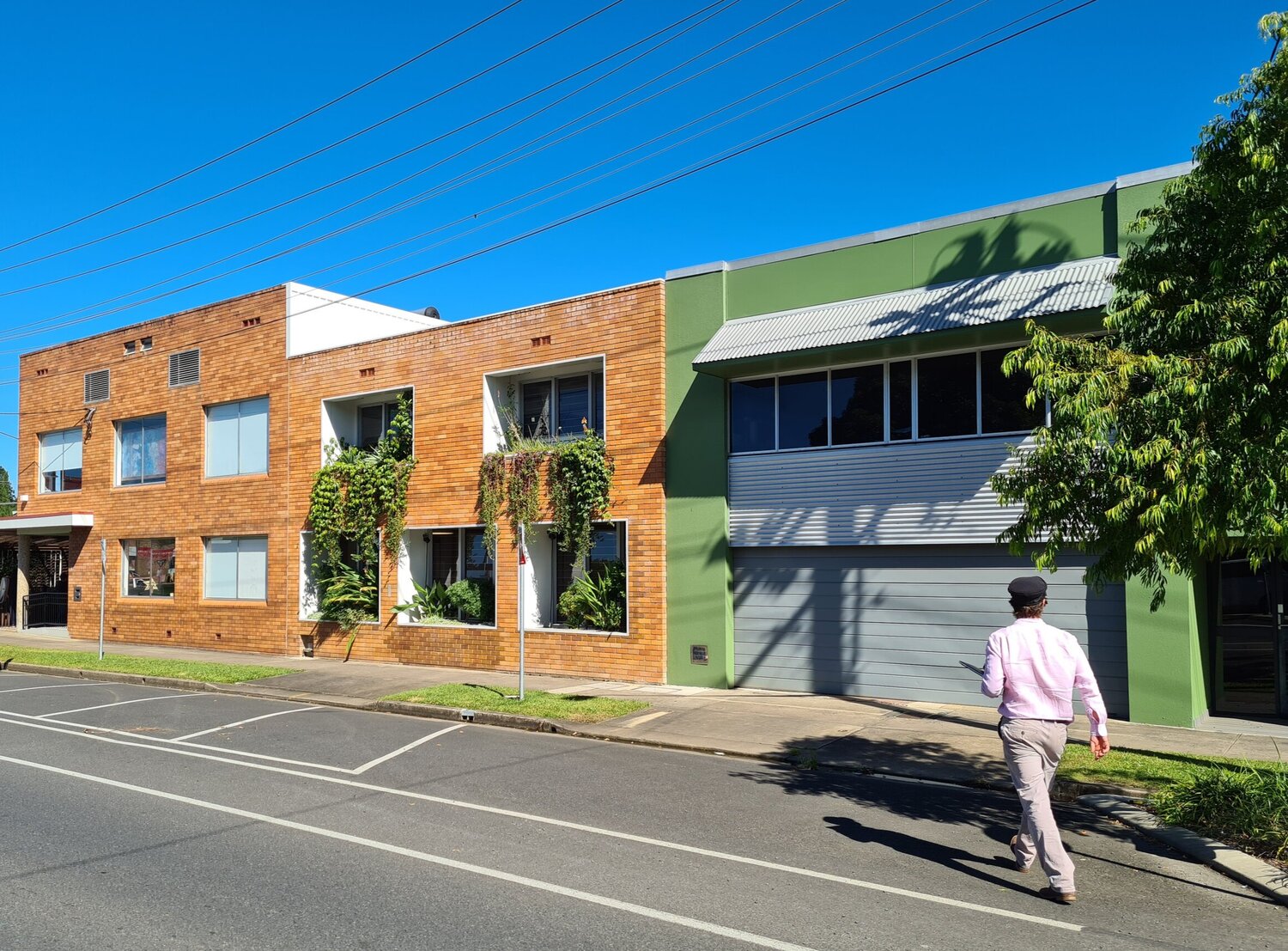
- Conway campus: established primary neighbourhood; ongoing maintenance and learning environment investment.
- SCU E-Block and Z-Block: leased university facilities supporting middle and senior secondary programmes, including International Baccalaureate Diploma delivery at Z-Block.
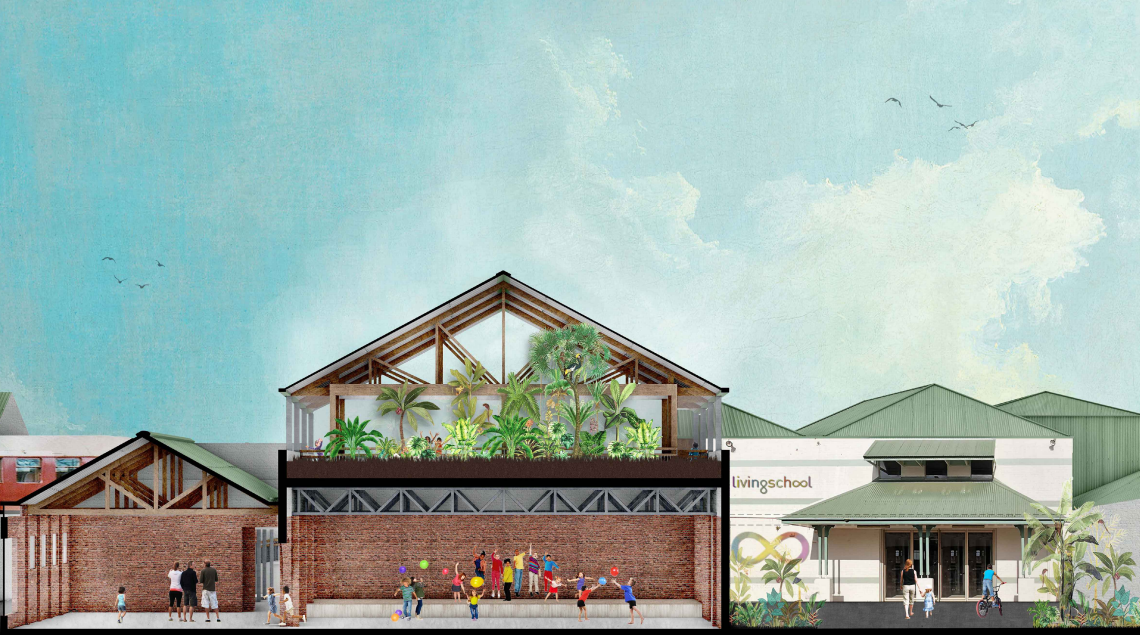
- Brown & Jolly (B&J): development approval secured for a new middle school campus in the Lismore CBD; community engagement, fundraising and financing options progressed through 2025 under 'The School the Kids Built' campaign.
- Stewart's Farm: planning work continued toward future campus approval as part of the school's multi-site strategy.
- 2A Carrington: fit-out planning explored to support operational and programme needs. Capital expenditure of $949,076 in 2025 supported campus facilities and programme delivery (see Theme 13 — Financial information).
Year in review narrative
Contextual school information
Year in review — calendar year 2025
Living School entered 2025 with Guardians of Purpose–endorsed priorities spanning governance renewal, policy consolidation, risk and WHS elevation, improved communications, professional learning, employee engagement, management systems and conversion of strategic priorities into an operational plan.
Governance and strategic alignment
In August 2025, the Guardians of Purpose and executive leadership held a Strategy and Risk Review workshop involving Learning Neighbourhood Directors, program leads and senior managers. The workshop aligned leadership on strategic priorities, identified foundations for success, and consolidated ten risk themes: clarity and community alignment; staff capability and wellbeing; educational delivery and compliance; student safety and wellbeing; financial sustainability; infrastructure and resources; technology and cybersecurity; governance and leadership; external shocks; and reputation and public perception.
Strongest progress to date was recorded in curriculum and academic programming, professional learning aligned to the progressive model, and articulation of the school's educational model through policy, process and training. Three priorities were confirmed for the next twelve months: operational and administrative capacity; communication of the progressive model; and realisation of current learning sites.
The Guardians adopted a formal risk appetite framework and commenced structured reporting against strategic and operational risks. Board actions through the year included constitution review, sub-committee terms of reference, board induction materials, finance committee oversight of fee relief processes, and progression of Ngulingah and IB-related governance items.
Community, enrolments and communication
The Developments and Partnerships function advanced family engagement, fundraising and community outreach. The October 2025 parent survey recorded a Net Promoter Score of approximately 90 and strong advocacy for the school's values-based approach. Leadership noted that sustaining this advocacy requires addressing operational consistency, communication and academic clarity themes raised in survey feedback.
Enrolment and marketing work included streamlined website content, enrolment portal improvements, parent archetype research, Academy open nights (more than 100 attendees across four sessions, contributing to immediate Academy enrolments), and IB scholarship promotion with increased maths and science emphasis. Community engagement included local business outreach, a CBD business Q&A event, council collaboration on community events, and media coverage of the Brown & Jolly development approval.
Brown & Jolly and campus development
Progress continued toward the Brown & Jolly middle school campus in the Lismore CBD, including development approval communications, fundraising initiation (including community tile donations and parent-led fundraising leadership), exploration of aligned financing options, and national positioning under 'The School the Kids Built' campaign narrative. Farm campus planning and multi-campus viability modelling remained active priorities within the 'realise learning sites' strategic pillar.
Learning neighbourhoods and pedagogy
Learning Neighbourhood statements of purpose were developed for Primary (K–4), Middle School (Years 5–8) and Academy (Years 9–13), articulating progression from Being, Belonging and Becoming through project-based middle years to IB Diploma pathways. Curriculum work included program builder development (K–4), Toddle and Classter reporting cycles, maths scope refinement and spiral curriculum planning. Vocational and partnership work advanced, including Regional Industry Education Partnerships engagement and Horizon vocational programming development.
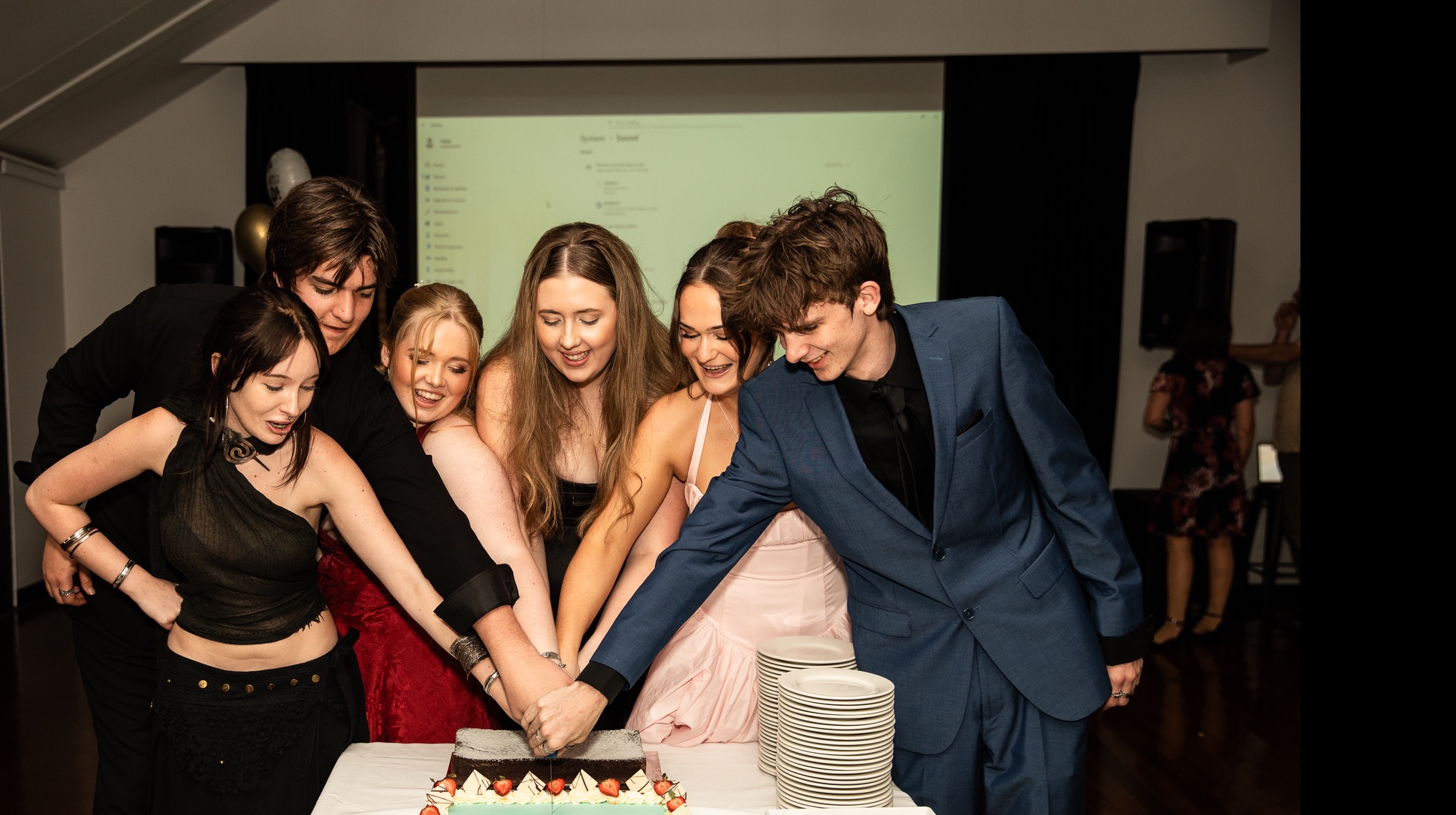
Graduation 2025 showcased senior pathways and graduate ambassadors. Academy promotion addressed parent uncertainty about academic rigour through repeated open nights and clearer IB messaging.
Operational systems and workforce
Management priorities emphasised a seamless administrative ecosystem synchronising compliance, educational and operational data; organisational clarity through position descriptions; WHS leadership capacity; and school-wide communication protocols. Staff surveys (September 2025) recorded very high professional pride and student relationships, with improvement priorities in workload manageability, resourcing, information sharing and voice in school decisions — themes reflected in the 2026 operational workplan.
Technology and safety
Cyber safety and data protection were identified as elevated risks. Work continued on website refinement, enrolment pipeline automation (including FluentCRM integration ahead of Classter onboarding), calendar transparency for families, and device policy review aligned to national social media regulation discussions.
Looking to 2026
Leadership and the Guardians converted workshop outcomes into prioritised actions with designated responsibilities: risk matrices for Board and executive oversight, a simplified workplan for 2025–2026 priorities, and regular leadership dialogue focused 'on the business' rather than only 'in the business'. Full strategy, risk and board source documents are held on file for governance audit.
Source documents reviewed: LS 2025 Priorities; Strategy and Risk Review Report (8 August 2025); GOP Risk Appetite Statement; Chief Development Officer Update (November 2025); Goals and Strategic Direction (2023–2028); TLS Strategic Plan Overview; GOP Rolling Action Item List.
Building programme and infrastructure (2025) 2025 was a pivotal year for Living School's physical footprint. Leadership and the Guardians managed a parallel track of daily multi-campus operations alongside infrastructure renewal, insurance-related processes and development of new learning sites.
Brown & Jolly middle school campus (Lismore CBD)
Development approval for the Brown & Jolly campus was communicated to the school community and wider Lismore region. Engagement included presentation at a Chamber of Commerce event, door-to-door outreach to more than 50 local businesses, and a business Q&A session attended by approximately 40 business owners. Local and national media coverage followed (including NBN News, November 2025). Fundraising commenced at Grandparents Day (approximately $1,000 in community tile donations, with further pledges expected), parent-led fundraising leadership, and Pozible crowdfunding infrastructure prepared for broader community campaigns. Financing options were explored with aligned local institutions. The project was positioned nationally under 'The School the Kids Built' to communicate that students are active participants in creating their learning environment.
Existing campuses
Conway, SCU E-Block and SCU Z-Block continued as operational campuses serving 313 census students. Learning Neighbourhood budgets were specified with transparent line-item resourcing. Maintenance, WHS compliance (including asbestos and lead paint reporting to the Guardians) and campus-specific safety credentials remained priorities.
Future sites
Planning advanced for Stewart's Farm as a future campus, Thriver and Horizon programme sites, and fit-out of 2A Carrington. The Strategy and Risk Review confirmed a mini-campus viability model — managing each site with understood budget envelopes and community engagement expectations.
Capital investment
Audited 2025 capital expenditure totalled $949,076 (8.4% of total expenditure), supporting facilities and programme delivery across the school's multi-campus model.
%20-%20option%202.png?v=2026062822)
NAPLAN and standardised testing
Living School participated in NAPLAN in 2025 for students in Years 3, 5, 7 and 9. The National Assessment Program – Literacy and Numeracy (NAPLAN) is an Australia-wide annual standardised assessment of literacy and numeracy against stage-appropriate benchmarks in Reading, Writing, Spelling, Grammar and Punctuation, and Numeracy.
Living School uses NAPLAN as one tool among several — alongside PAT Reading and Maths, teacher observations, and formative and summative classroom assessment — to understand where each learner is on their journey and to plan for growth at individual, class and school level. The school does not teach to the test; NAPLAN data informs programming while preserving holistic, connected and experiential learning.
2025 context — cyclone Alfred and a compressed testing window
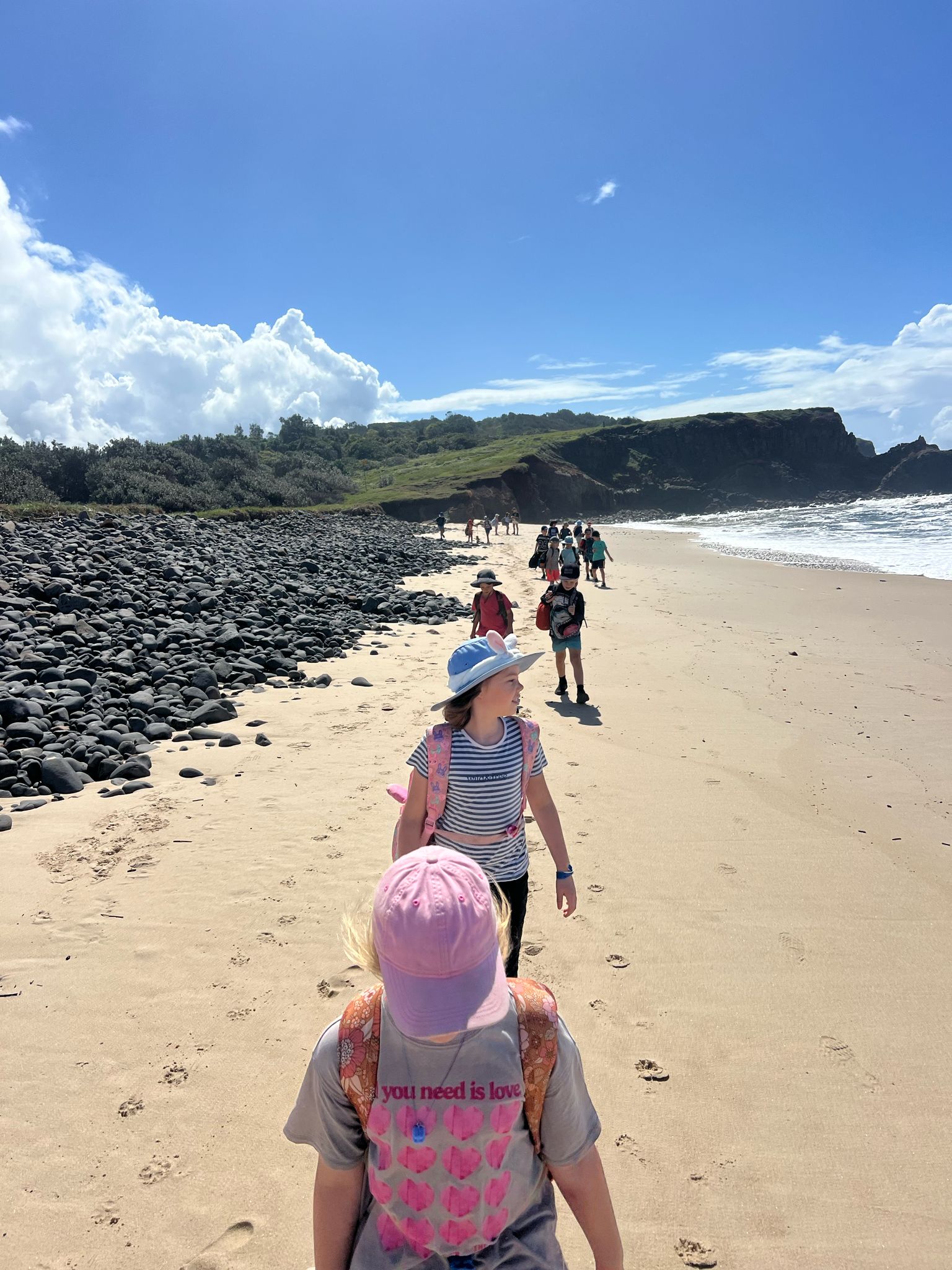
The 2025 NAPLAN period presented significant operational challenges. An earlier commencement date and the Term 1 break left only three of the twelve official testing days available to complete all assessments. Tropical Cyclone Alfred further disrupted preparations: the Conway Street Primary campus was evacuated and classes were relocated to and hosted by the Middle School campus at SCU E-Block. Despite these circumstances, students, families and staff adapted effectively and completed the full NAPLAN schedule. Preliminary school data indicates that, in most instances, Living School students matched or outperformed students in similar schools and within the broader education network, with evidence of growth in several key areas.
Preliminary proficiency summary (2025 cohort data)
The table below summarises participating cohort sizes and median proficiency bands from preliminary school data (Reading, Grammar and Punctuation, Spelling and Numeracy). Writing results were not included in this preliminary release as individual NAPLAN reports were scheduled for release from July 2025 pending marking of the writing task.
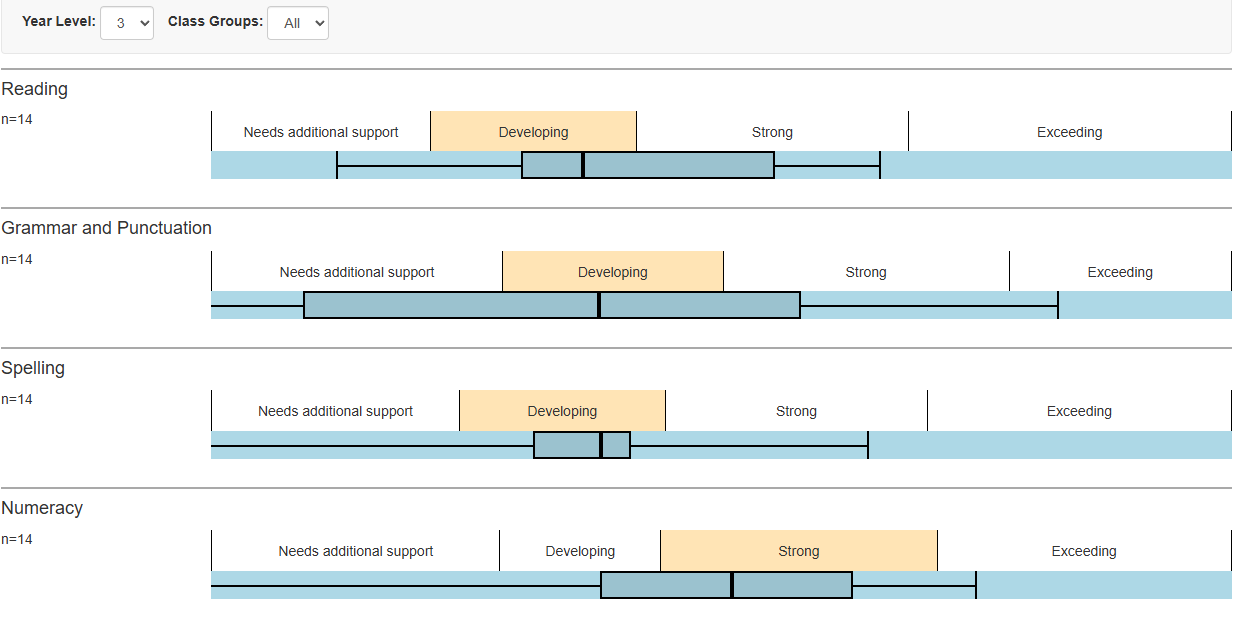
- Year 3 (n=14): medians in Developing to Strong across domains; Numeracy median in Strong.
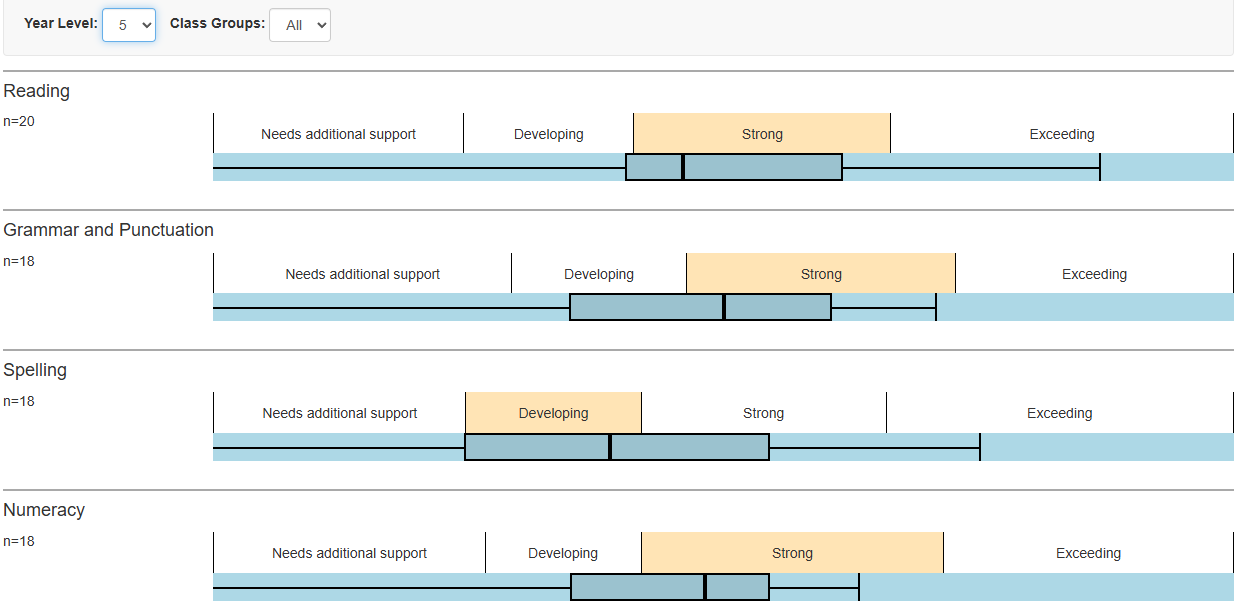
- Year 5 (n=18–20): Reading, Grammar and Punctuation and Numeracy medians in Strong; Spelling median in Developing.
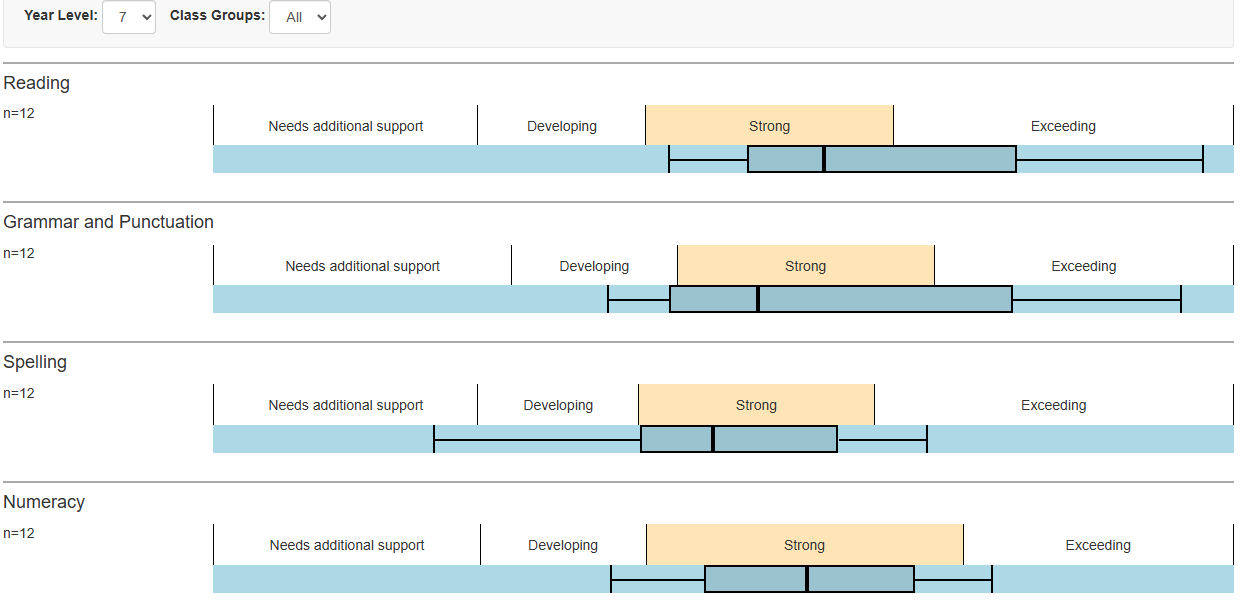
- Year 7 (n=12): Reading strongest, with median in Strong extending toward Exceeding; Numeracy and Grammar and Punctuation medians in Strong; Spelling shows the widest spread (Needs additional support to Exceeding) with median in Strong.
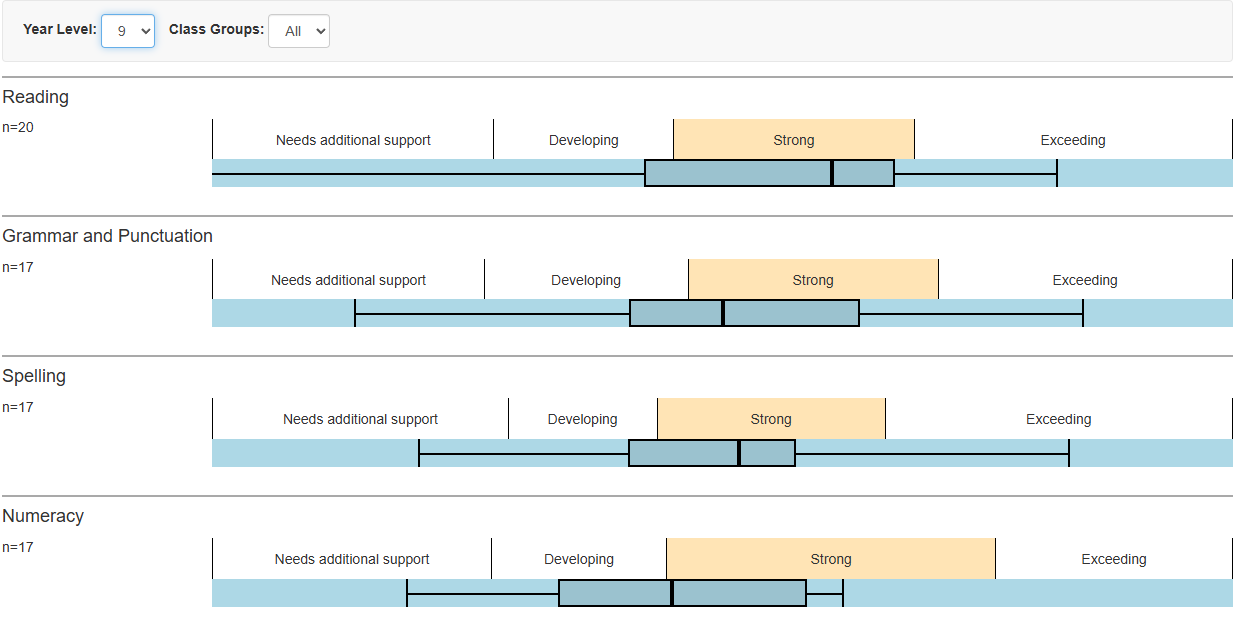
- Year 9 (n=17–20): medians in Strong across all four reported domains; Reading shows the highest relative median.
Charts accompanying this section show proficiency distributions by year level. Cohort sizes vary where parents/carers withdraw students from NAPLAN or where students are exempt — reflected in domain-specific participation counts on each chart.
Living School will continue to triangulate NAPLAN outcomes with PAT and classroom assessment to target teaching programmes and support extension and intervention where needed.
NAPLAN Coordinator
Jeremy Whiterod.
| Year level | Domain | Students (n) | Median proficiency band |
|---|---|---|---|
| Year 3 | Reading | 14 | Strong |
| Year 3 | Grammar and Punctuation | 14 | Strong |
| Year 3 | Spelling | 14 | Developing |
| Year 3 | Numeracy | 14 | Strong |
| Year 5 | Reading | 20 | Strong |
| Year 5 | Grammar and Punctuation | 18 | Strong |
| Year 5 | Spelling | 18 | Developing |
| Year 5 | Numeracy | 18 | Strong |
| Year 7 | Reading | 12 | Strong |
| Year 7 | Grammar and Punctuation | 12 | Strong |
| Year 7 | Spelling | 12 | Strong |
| Year 7 | Numeracy | 12 | Strong |
| Year 9 | Reading | 20 | Strong |
| Year 9 | Grammar and Punctuation | 17 | Strong |
| Year 9 | Spelling | 17 | Strong |
| Year 9 | Numeracy | 17 | Strong |
Senior secondary outcomes (HSC, RoSA, IB)
Student performance
Living School's senior secondary programme operates through the Academy (Years 9-12) at SCU Z-Block, offering HSC, Record of School Achievement (RoSA) and International Baccalaureate Diploma Programme pathways.
Celebrating our 2025 graduates
In 2025, Living School celebrated its graduating cohort at a ceremony honouring student voice, creativity and diverse pathways. Six students were eligible for and awarded the Higher School Certificate - every HSC candidate successfully completed their credential. A further six Year 12 students completed an NCC (non-HSC credential) pathway, reflecting Living School's commitment to personalised senior pathways rather than a single model of success.
Our HSC graduates pursued a genuinely diverse programme of study across 11 courses - from Ancient History and Business Studies to Drama, Music, Visual Arts, Design and Technology, Biology and Mathematics Standard 2. This breadth mirrors Living School's progressive philosophy: students are known as individuals and supported to study what matters to them.
- Highlights from 2025 HSC results (aggregate only; no individual student data published):
- 100% HSC completion - all six eligible candidates awarded the HSC
- 36.7% of course results in Performance Bands 5-6 (11 of 30), including one Band 6 in Music 1
- 56.7% in Bands 3-4 (17 of 30), demonstrating solid achievement across core literacy and humanities
- Creative and performing arts were a standout strength: 80% of results in Drama, Music and Visual Arts were in Bands 5-6
- Every English result (Standard and Advanced) was Band 3 or above
- Society and Culture: both candidatures achieved Band 4
Comparison with NSW statewide performance
NESA requires HSC reporting to include comparison with state performance and interpretative comment. For a small cohort, course-by-course band tables are not required and are discouraged where they could identify individual students (Education Act 1990, s 18A; privacy and personal information policies).
Living School reports an aggregate band distribution for all HSC course results and groups outcomes by learning area. Statewide reference figures should be drawn from the NESA Results Analysis Package (RAP) on Schools Online. Before RANGS submission, insert the statewide Bands 5-6 percentage from RAP 2025 in the interpretative sentence below: "In 2025, 36.7% of Living School HSC course results were in Bands 5-6, compared with [insert RAP statewide %] across NSW."
Celebrating Year 10 RoSA progress (2025)
Living School's 2025 Year 10 cohort at SCU Z-Block numbered 29 students in the NSW school census. These young people are working toward the Record of School Achievement (RoSA), the credential that recognises meaningful progress through Stage 5 before senior secondary pathways deepen in Years 11 and 12.
We celebrate a school culture that refuses a single definition of success. In 2025, Living School students progressed through RoSA on both standard graded courses and Life Skills pathways - each pathway aligned to NESA syllabus requirements and recorded through SchoolsHUB. Students on Life Skills pathways successfully completed 2025 course requirements and mandatory curriculum areas, demonstrating growth in literacy, numeracy, science, human society and its environment, creative arts and personal development, health and physical education.
Students on standard RoSA pathways completed board-developed courses across English, Mathematics, Science, Geography, History and Personal Development, Health and Physical Education, with achievement recorded on the A-E grade scale. Mandatory NSW curriculum requirements were met across all learning areas for students with completed 2025 RoSA entries in SchoolsHUB.
Living School continues explicit literacy and numeracy teaching across the Middle School and Academy. Year 10 students work toward NESA minimum standards through classroom programmes, assessment for learning and targeted support where needed. Minimum standard outcomes are reported to NESA through SchoolsHUB; this annual report publishes cohort-level progress only and does not identify individual students.
Senior pathway breadth
Beyond RoSA and HSC, Living School promotes IB Diploma candidacy, vocational learning and personalised NCC senior pathways. Post-school destinations for Year 12 completers are reported separately in Theme 4 (post-school destinations). IB Diploma Programme outcomes for 2025 graduates and vocational participation rates should be confirmed in Conductor before final RANGS upload where applicable.
| Credential / pathway | Students or results (n) | Outcome summary | Achievement profile | Notes |
|---|---|---|---|---|
| HSC - All course results (school aggregate) | 30 | Strong and sound achievement across the cohort | Bands 5-6: 36.7%; Bands 3-4: 56.7%; Bands 1-2: 6.7% | Includes 1 Band 6 (Music 1); 0 Band 1 results; aggregate only |
| HSC - Creative and performing arts | 10 | Standout strength area | Bands 5-6: 80.0%; Bands 3-4: 20.0%; Bands 1-2: 0.0% | Drama, Music 1 and Visual Arts; reflects Academy arts programme |
| HSC - English (Standard and Advanced) | 6 | Every result Band 3 or above | Bands 5-6: 0.0%; Bands 3-4: 100.0%; Bands 1-2: 0.0% | Core literacy credential readiness |
| HSC - Humanities and social sciences | 7 | Consistent sound achievement | Bands 5-6: 0.0%; Bands 3-4: 85.7%; Bands 1-2: 14.3% | Ancient History, Business Studies, Society and Culture; both Society and Culture results Band 4 |
| HSC - STEM and applied technology | 7 | Balanced achievement across sciences and applied design | Bands 5-6: 42.9%; Bands 3-4: 42.9%; Bands 1-2: 14.3% | Biology, Design and Technology, Mathematics Standard 2 |
| HSC - Credential awarded | 6 of 6 eligible | 100% HSC completion | All eligible candidates awarded the HSC | Year 12 cohort credential outcome |
| Credential / pathway | Students or results (n) | Outcome summary | Achievement profile | Notes |
|---|---|---|---|---|
| RoSA - Year 10 cohort (2025 census) | 29 | Cohort eligible for Record of School Achievement | Stage 5 credential in progress | SCU Z-Block secondary campus; NSW school census 2025 |
| RoSA - Life Skills pathway | Cohort | 2025 course and mandatory requirements Completed | Life Skills outcomes recorded in SchoolsHUB | Personalised pathway; English, Mathematics, Science, HSIE, PDHPE and creative arts Life Skills courses |
| RoSA - Standard graded courses | Cohort | Board-developed courses completed across core learning areas | Achievement recorded A-E; aggregate reporting only | English, Mathematics, Science, Geography, History and PDHPE; no individual grades published |
| RoSA - Mandatory curriculum (NSW) | Cohort | Mandatory curriculum requirements Completed | All required learning areas addressed | English, Mathematics, Science, HSIE, Languages, Technology, Music, Visual Arts, PDHPE |
| RoSA - Literacy and numeracy minimum standards | 29 | Targeted teaching and assessment for learning continue | Reported to NESA via SchoolsHUB; cohort-level disclosure only | Whole-school literacy and numeracy programmes support Stage 5 and RoSA readiness |
| Senior pathways - Year 12 cohort diversity | 12 (census) | Multiple credential pathways honoured | 6 HSC awardees; 6 NCC pathway completers | HSC, RoSA, IB Diploma and personalised senior pathways available across the Academy |
| HSC - Courses represented (2025 programme) | 11 | Broad senior curriculum offer | Diverse student choice supported | Ancient History, Biology, Business Studies, Design and Technology, Drama, English Advanced, English Standard, Mathematics Standard 2, Music 1, Society and Culture, Visual Arts |
Teacher professional learning, accreditation and qualifications
All staff participated in mandatory compliance and safety training throughout 2025, including child protection, work health and safety, and emergency procedures. Teaching staff engaged in curriculum-focused professional learning aligned to Living School programming, inquiry pedagogy, and campus-specific operational requirements (including surf and aquatic supervision credentials).
Participation figures below are drawn from the school's 2025 professional learning register. Where an activity was completed by all staff, the participant count reflects the 2025 NSW census total staff headcount (108).
| Professional learning activity | No. of staff participating |
|---|---|
| HLTAID009 CPR and HLTAID012 Childcare First Aid and Senior Resuscitation (includes CPR, asthma and anaphylaxis management, and defibrillator use) | 53 |
| Australian Pool and Ocean Lifeguard Association — School Surfing Supervisor Award (SSSA) | 15 |
| Australian Pool and Ocean Lifeguard Association — Protected Waters Safety Supervisor Award (PWSSA) annual proficiency assessment (22 January 2025) | 26 |
| Proficient Teacher Accreditation (maintenance / progression activities) | 0 |
| Work Health and Safety (WHS) policy overviews — Code of Conduct, supervision, fire and emergency evacuation drill | 108 (all staff) |
| Child Protection | 108 (all staff) |
| AusSwim | 1 |
| AISNSW — PA Course | 2 |
| Medium Rigid Licence | 2 |
| AISNSW — CMEA Interpretation Course | 1 |
| ASBA — ESG and Climate Education | 1 |
| Restorative Practices | 3 |
| SMART Spelling | 2 |
| Kathleen Murdoch — Inquiry Learning | 13 |
| NeuroDiversity Hub webinar — Autism, ADHD and Aggressive Behaviour | 1 |
| CPA Australia | 1 |
| Copyright and School Libraries — What You Need to Know (webinar) | 1 |
| Food Safety Supervision Skill Set | 1 |
| Youth Mental Health First Aid | 1 |
| AISNSW miscellaneous courses | 108 (all staff) |
Teacher accreditation levels
Teacher qualifications and professional learning
| Accreditation level | No. of teachers |
|---|---|
| Conditional | 0 |
| Provisional | 6 |
| Proficient | 39 |
| Highly Accomplished | 0 |
| Lead | 1 |
Workforce composition
Workforce composition
| Measure | Value |
|---|---|
| Total staff (headcount, all locations) | 108 |
| Total staff (FTE, all locations) | 53.2 |
| Principal (headcount) | 3 |
| Principal (FTE) | 1.0 |
| Teaching staff (headcount) | 49 |
| Teaching staff (FTE) | 31.2 |
| Non-teaching staff (headcount) | 56 |
| Non-teaching staff (FTE) | 21.0 |
| Staff identifying as Aboriginal and/or Torres Strait Islander (headcount) | 4 |
| NESA-accredited teachers (headcount, internal register) | 46 |
| Indigenous staff — Conway campus | 2 headcount (1.4 FTE) |
| Indigenous staff — SCU E-Block campus | 1 headcount (0.3 FTE) |
| Indigenous staff — SCU Z-Block campus | 1 headcount (0.6 FTE) |
| Workforce headcount — Conway campus | 33 (16.7 FTE) |
| Workforce headcount — SCU E-Block campus | 41 (20.1 FTE) |
| Workforce headcount — SCU Z-Block campus | 34 (16.4 FTE) |
| Teaching staff headcount — Conway campus | 9 |
| Teaching staff headcount — SCU E-Block campus | 19 |
| Teaching staff headcount — SCU Z-Block campus | 21 |
Attendance, retention and non-attendance management
Student attendance data reported below is drawn from the NSW Student Attendance Collection (STATS), Semester 1 2025, finalised on 3 August 2025 and reported to ACARA for My School using SchoolsHUB whole-day attendance methodology.
- School-wide summary (Conway and SCU E-Block locations reported in STATS Semester 1 2025):
- Combined overall attendance (weighted across reported year levels at both locations): approximately 84.7%.
- Note: SCU Z-Block (Years 9–12) STATS location report was not included in the Semester 1 STATS import — add Z-Block figures when available for a complete secondary campus picture.
Conway campus (AGEID 86543 — Years 1–4 reported in STATS)
- Overall attendance: 86.10%.
- Non-Indigenous / not stated attendance: 86.78%.
- Aboriginal and/or Torres Strait Islander attendance: 77.62%.
- Proportion of students attending at least 90% of possible days: 48.12% overall (51.99% non-Indigenous; Indigenous cohort too small for a stable percentage at this location in Semester 1).
- Year-level attendance rates (all students): Year 1 80.55%; Year 2 89.58%; Year 3 86.20%; Year 4 87.62%.
SCU E-Block campus (AGEID 89094 — Years 5–10 reported in STATS)
- Overall attendance: 83.84%.
- Non-Indigenous / not stated attendance: 85.66%.
- Aboriginal and/or Torres Strait Islander attendance: 66.72%.
- Proportion of students attending at least 90% of possible days: 42.91% overall (44.59% non-Indigenous; 27.17% Aboriginal and/or Torres Strait Islander).
- Year-level attendance rates (all students): Year 5 85.16%; Year 6 84.47%; Year 7 88.32%; Year 8 84.11%; Year 9 89.78%; Year 10 72.29%.
- Enrolment movements and retention (2025, aggregate SIS data — no student-identifiable information):
- Total student withdrawals recorded in 2025: 81.
- Primary withdrawals (Kindergarten to Year 6): 29.
- Secondary withdrawals (Years 7–12, including year-coded NCC pathway): 50.
- Withdrawals recorded as NCC without year-level coding: 2.
- Year 12 completions / final attendances in 2025: 12 students (6 mainstream pathway; 6 NCC pathway), consistent with the census Year 12 enrolment of 12 at SCU Z-Block.
- Year 11 final attendances in 2025: 8 students (6 mainstream; 2 NCC pathway).
Retention and non-attendance management
Living School records daily attendance through the school's student information system. Unexplained absences trigger follow-up with families in line with the school's attendance and enrolment policies. Learning Neighbourhood and support teams monitor patterns of absence, including for students with attendance below 90%, and coordinate re-engagement strategies where required. Persistent non-attendance is escalated through pastoral and leadership pathways, with documentation retained for audit and census verification.
Post-school destinations
Post-school destinations
Living School reports post-school destinations for students who completed Year 12 in 2025. The census recorded 12 Year 12 students at SCU Z-Block; aggregate completion data is consistent with attendance and retention reporting (6 mainstream pathway; 6 NCC pathway).
Two of Ngulingah graduates went on to full time employment. One became a carer for younger siblings. Other three are on a gap year or looking for employment.
Enrolment policy summary
| Policy | Summary | Changes in 2025 | Public link |
|---|---|---|---|
| Enrolment (P.1.I.2) | The P.1.I.2 Enrolment policy requires the school to maintain a secure enrolment register for every student (identity, family contact, date of enrolment, Advocate Tutor, prior school). On acceptance, the school secretary collates records, assigns a Learning Advocate and tutor group, enters data in the electronic management system, and provides an orientation kit including behaviour management policies. Withdrawal procedures record leaving dates, destination schools, and NSW destination-unknown notification where required. | No substantive amendment to P.1.I.2 in 2025 (effective January 2020; last updated July 2021; next review April 2027). Enrolment pipeline and Classter records supported 313 census students across three campuses. Four Academy open nights attracted more than 100 prospective families. | https://drive.google.com/file/d/1h5Br2SEpw9AyzmbY1pxoTfmrN3cjHqV2/view |
| Distance Education Enrolment | The Distance Education enrolment policy sets transparent, inclusive eligibility and application procedures for NSW students in Kindergarten to Year 12 who require flexible remote learning (including geographical isolation, medical or mental health needs, or vocational, performing arts or sporting commitments). Enrolments are managed in Classter; teaching and learning are delivered through Toddle. The Conductor approves final placements; the Director of Distance Education oversees implementation and capacity to meet student needs. | Distance Education enrolment policy and procedures were published to align with NESA distance education registration requirements, clarifying eligibility, Classter application workflow, interview and transition planning, and withdrawal reporting. | https://drive.google.com/file/d/1SIKP8u6MPwTVVV9wU81BQhXeJi4gktci/view?usp=drive_link |
| IB Diploma Programme Admissions | The IB Diploma Programme admissions policy describes entry to Living Academy's IB DP pathway, aligned with the IB mission and Learner Profile and Living School's progressive learning model. Applicants are assessed against enrolment criteria (capacity to self-manage, benefit from the programme, contribute positively to community, and embrace the holistic learning approach). The process includes application and interview with the Conductor, offers subject to capacity and waiting lists, and non-discrimination on disability, race, gender or denomination. | No substantive policy amendment in 2025 (approved by Guardians of Purpose, 14 September 2024; next review January 2026). In 2025 the Academy increased IB promotion, refined scholarship information (including mathematics and science emphasis), held four open nights (>100 attendees), and progressed a more rigorous IB scholarship application process including entrance examination requirements. | https://drive.google.com/file/d/1TZXCOjyKiXSnkHNskmrnckwduUfb7So-/view?usp=sharing |
Mandatory policy summaries and public links
| Policy | Summary | Changes in 2025 | Public link |
|---|---|---|---|
| Child Protection | The Child Protection policy sets safeguarding standards, mandatory reporting pathways, and staff obligations to protect children and young people. It defines roles, reporting timelines, induction requirements, and links to the staff Code of Conduct and mandatory reporting procedures. | Version v2025.2 was approved by the Guardians in September 2025. The policy was consolidated into the school's digital policy handbook. All staff completed mandatory Child Protection professional learning in 2025 (108 participants on the workforce register). | https://drive.google.com/file/d/1nGMRO_MFepmJbxwMtX2DUYBXXnu48K1B/view?usp=drive_link |
| Anti-Bullying | The Anti-Bullying policy outlines prevention strategies, reporting procedures, and response protocols for bullying behaviour, including online bullying. It aligns with the NSW Anti-Bullying Strategy and Living School's values of Respect, Responsibility and Relationships. | Policy handbook consolidation progressed in 2025. Communication protocol work was initiated following parent, staff and student surveys. Behaviour consistency was identified as a shared improvement theme; leadership review in Term 4 2025 informed 2026 planning. | https://drive.google.com/file/d/1Up0qDPYw1aqnEcBeBjxOjMB6kSPkj0rg/view?usp=drive_link |
| Discipline / Positive Behaviour | The School Behaviour policy describes conduct expectations, restorative and relational approaches to managing behaviour, and positive behaviour support across all campuses and learning neighbourhoods. | All staff completed Restorative Practices professional learning in 2025. Following 2025 survey feedback on behaviour consistency, leadership incorporated behaviour and wellbeing support into 2026 planning during the Term 4 review. | https://drive.google.com/file/d/1-Nt1bVqIVaShLcigKe7mhrALNX5Gm-yE/view?usp=drive_link |
| Managing Complaints and Grievances | The complaints policy sets out how parents and community members raise concerns, expected response timelines, escalation pathways, and resolution processes. It supports fair, timely handling of grievances. | Version v2025.1 was approved by the Leadership Team in November 2025. The policy was included in handbook consolidation work toward digital publication. | https://drive.google.com/file/d/1mz2TmZxWX5oerHG5qfnugIKctgY45ytt/view?usp=drive_link |
| Student Welfare | The student welfare framework covers wholebeing care, wellbeing support, coordination between learning neighbourhoods and leadership, and alignment with excursion, safety and whole-being governance structures. | Student safety and wellbeing remained a high-priority risk theme in the August 2025 Strategy and Risk Review. Wellbeing programmes, excursion protocols and Guardians committee work on whole-being governance progressed through the year. | https://drive.google.com/file/d/1OkkgkFkm3Krc8taLV6JqXiouFyPwMmop/view?usp=drive_link |
School determined priority areas (CAPE)
| Area | Priorities | Achievements |
|---|---|---|
| Community — Enrolments and engagement | Increase enrolments in a careful, measured and responsible manner; strengthen community understanding of Living School's ethos and progression; build sustainable fundraising and local partnerships. | 2025 NSW census: 313 students across three campuses (120 Conway; 102 SCU E-Block; 91 SCU Z-Block). Aboriginal and/or Torres Strait Islander enrolment: 46 students (14.7%). Parent Net Promoter Score approximately 90 (October 2025). Four Academy open nights (>100 attendees). Brown & Jolly fundraising commenced; local business engagement and development approval communications advanced. Social media reach expanded (Instagram ~3,359 followers; Facebook ~4,100 followers). |
| Administration — Governance, risk and systems | Complete Board renewal; activate sub-committees; consolidate policy handbook; elevate risk, incident and WHS reporting; improve communications and management systems; define professional learning and employee engagement frameworks. | August 2025 Strategy and Risk Review aligned Guardians and executive leadership on priorities and ten risk themes. Risk appetite statement adopted. Board induction pack and policy handbook work progressed toward digital publication. GOP Rolling Action Item List maintained for accountable follow-up. Enrolment pipeline improvements, organisational structure review, RANGS documentation updated, and communication protocol work initiated. Fee relief oversight processes documented through Finance Committee. |
| Pedagogy — Curriculum, IB and learning neighbourhoods | Develop curriculum and assessment as a renowned strength; articulate Learning Neighbourhood progression; strengthen IB visibility; deliver professional learning aligned to the progressive model. | Learning Neighbourhood statements of purpose published for Primary, Middle School and Academy. K–4 program builder development, Toddle and Classter reporting cycles, maths scope and spiral curriculum planning advanced. IB promotion and scholarship refinement; RIEP vocational partnership engagement; Horizon and Thriver programme planning. Professional learning register reflects broad staff participation in inquiry pedagogy, safety credentials and compliance training (see Theme 5). |
| Environment — Campuses, capital and resources | Realise current learning sites; progress Brown & Jolly CBD campus; Farm campus planning; manage each site as a mini-campus with transparent budgets; diversify capital funding. | Multi-campus operation at Conway, SCU E-Block and SCU Z-Block (313 census students). Brown & Jolly development approval secured; CBD community and business engagement (40+ business Q&A attendees); fundraising commenced (Grandparents Day tiles, parent-led drive, Pozible platform); national 'The School the Kids Built' campaign. Stewart's Farm and 2A Carrington planning advanced. 2025 capital expenditure: $949,076. Learning Neighbourhood budgets specified; NBN/local media coverage of CBD campus plans. |
Initiatives promoting respect and responsibility
Initiatives promoting respect and responsibility
School determined priority areas
Living School promotes respect and responsibility through its stated values — Respect (for nature, others, property and self), Responsibility (for thoughts, words, actions and deeds), and Relationships (positive and productive relationships in all endeavours). These values underpin policies, pastoral practice and community expectations.
Initiatives in 2025 included
Values and culture
The Strategy and Risk Review emphasised embedding a culture of trust and collaboration through belonging programmes, rituals and feedback loops. Graduation 2025 and community events (including Grandparents Day, Parents Catalyst Curriculum nights, and Living School 2026 and Beyond sessions) reinforced shared purpose and student voice.
Student voice and belonging
The 2025 student satisfaction survey (Years 5–12) recorded 74% agreement that students have real influence in shaping school culture and 71% that opinions are listened to and acted on. Leadership responded with student forum structures and continued investment in camps, excursions and campus learning environments.
Wellbeing and safety
Student safety and wellbeing remained a high-priority risk theme, with controls including child protection training, excursion protocols and wellbeing programmes. Restorative Practices professional learning was completed by staff. Whole-being governance structures progressed through Guardians committee work.
Responsible citizenship and community service
Community outreach included local business engagement, council event collaboration, vocational partnership development (RIEP), and exploration of responsible technology use — including dialogue around minimalist device alternatives aligned to national under-16 social media regulation.
Indigenous knowledge and culture
A strategic goal remains deepening integration of Indigenous knowledge, culture and wisdom. Ngulingah programme governance progressed with Board approval processes for Land Council agreement. Census 2025 recorded 46 Aboriginal and/or Torres Strait Islander students (14.7%).
Behaviour and learning culture
Survey feedback identified behaviour consistency as a shared improvement theme across stakeholder groups. Leadership review in Term 4 2025 incorporated behaviour and wellbeing support into 2026 planning, alongside clearer academic reporting and communication protocols.
Parent, teacher and student satisfaction
Living School reports aggregate satisfaction data from parent, staff and student surveys conducted in 2025. Results below are summarised to protect privacy — no individual responses, quotes or identifiable comments are published.
Executive summary
Parent feedback was exceptionally strong (Net Promoter Score approximately 90; ~95% would recommend the school). Staff reported very high professional pride and student relationships, with operational and resourcing themes emerging as improvement priorities. Students (Years 5–12, Middle School and Academy surveys) reported strong belonging and student voice (74% agree on influence in shaping school culture), with meaningful real-world learning and behaviour consistency as shared improvement themes.
Governance and strategic alignment
The August 2025 Strategy and Risk Review and November 2025 executive updates confirmed that sustaining parent advocacy requires addressing communication, staffing continuity, academic clarity and operational consistency — themes convergent across all three surveys.
Cross-survey alignment
Parents, staff and students consistently valued Living School's mission, relationships and experiential learning, while identifying communication, workforce continuity, resourcing, behaviour consistency and multi-campus operational systems as priorities for 2026.
School response
Leadership and the Guardians of Purpose reviewed all 2025 survey results in Term 4 2025. Actions underway or planned include improved communication protocols (internal alignment before external messaging), workforce retention initiatives, clearer academic reporting, student voice structures (including student forum), behaviour and wellbeing support, enrolment and website clarity, and continued investment in camps, excursions and campus learning environments. Full survey analyses are held on file for governance review.
Survey highlights
Parents recommend
~95%
Child enjoys school
96%+ agree
Staff professional pride
100% agree
Student voice
74% agree
Parents
| Measure | Result |
|---|---|
| Survey period | October 2025 |
| Responses | 59 |
| Would recommend Living School | ~95% |
| Net Promoter Score | ~90 |
| My child enjoys coming to school | 96%+ agree |
| My child feels known, cared for and has positive relationships with adults | 98%+ agree |
| Helps my child think creatively, critically and independently | 95%+ agree |
| Opportunities to learn in real-world contexts | 95%+ agree |
| Family values are respected and reflected | 90%+ agree |
| I feel welcome when visiting the school | 95%+ agree |
Staff
| Measure | Result |
|---|---|
| Survey period | September 2025 |
| Responses | 20 |
| I believe I am a skilful worker | 100% agree |
| I'm proud to work at Living School | 100% agree |
| Staff have good relationships with students | 100% agree |
| I really throw myself into work | 95% agree |
| I feel confident performing my role | 90% agree |
| I find work fun | 90% agree |
| I am working towards goals that matter to me | 80% agree |
| I feel supported at work | 80% agree |
| I would recommend Living School as a place to work | 75% agree |
| There are opportunities for me to develop my role | 60% agree |
| My workload is manageable | 40% agree |
| There are opportunities to know how well I'm doing at work | 40% agree |
| I have enough resources to do my job | 35% agree |
| I have a voice in how things go at Living School | 35% agree |
| Information is shared effectively | 30% agree |
| Living School is well funded | 25% agree |
Summary financial information
Living School (Living Schools Global Limited) reports summary financial information for the 2025 calendar year drawn from the school's audited financial statements. The school operates as a single entity across three campuses (Conway, SCU E-Block and SCU Z-Block). All figures below are consolidated for 2025 and reconcile to the income and expenditure charts accompanying this section.
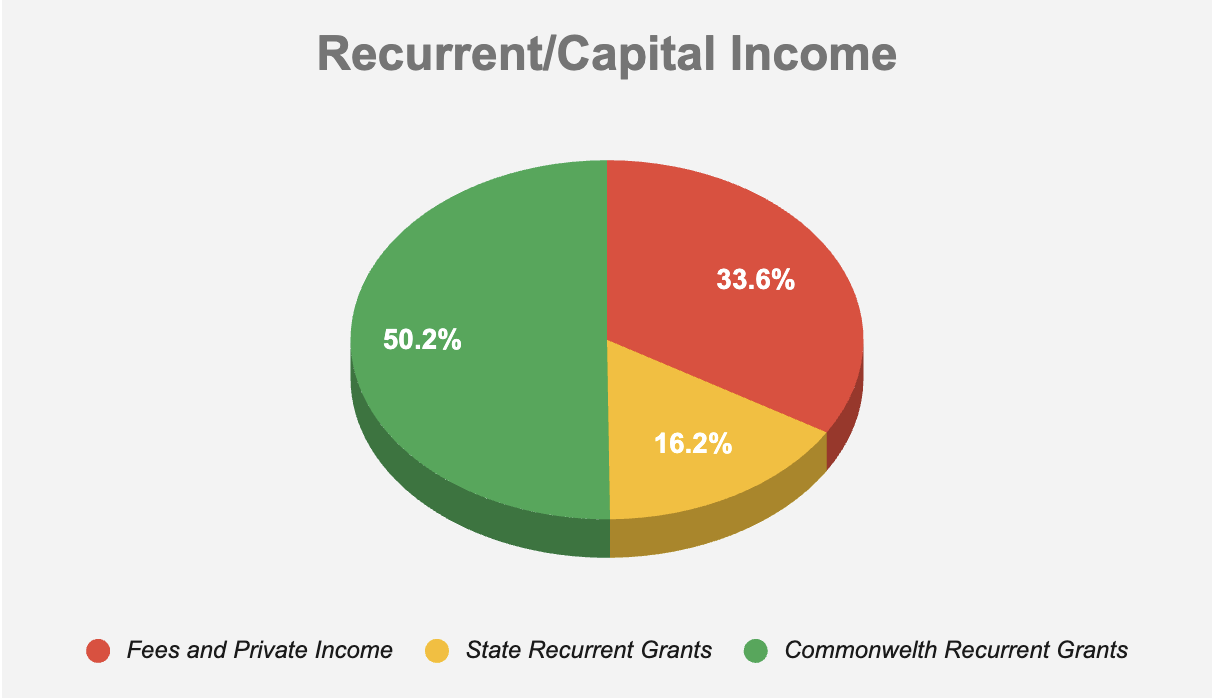
Recurrent and capital income — total $11,277,374
- Commonwealth recurrent grants: $5,659,866 (50.2%)
- Fees and private income: $3,792,230 (33.6%)
- State recurrent grants: $1,825,278 (16.2%)
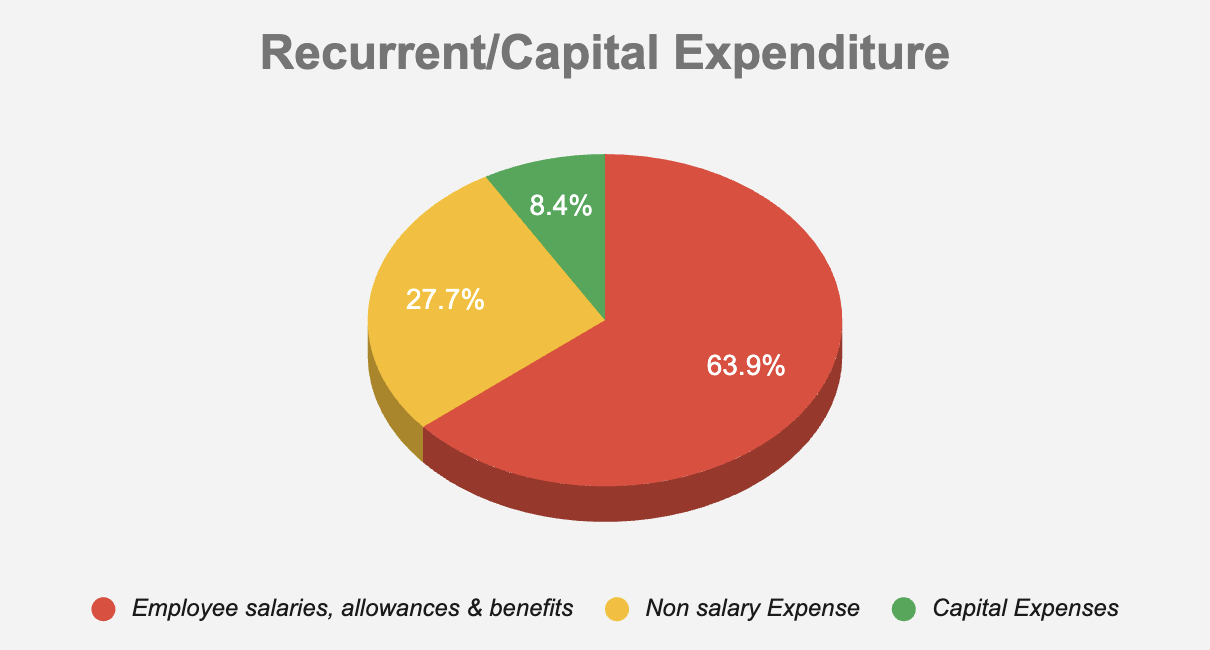
Recurrent and capital expenditure — total $11,301,940
- Employee salaries, allowances and benefits: $7,221,504 (63.9%)
- Non-salary expense: $3,131,360 (27.7%)
- Capital expenses: $949,076 (8.4%)
Recurrent operating expenditure (salaries and non-salary expenses) totalled $10,352,864, with capital investment of $949,076 supporting campus facilities and programme delivery.
Overall financial result
Total expenditure exceeded total income by $24,566 (0.2% of total income), reflecting continued investment in staffing, multi-campus operations and capital works during a year of enrolment growth to 313 students.
Student context (audited financial statements)
The audited accounts were prepared on a student enrolment base of 313 students, including 48 Aboriginal and/or Torres Strait Islander students (15.3%). The 2025 NSW census reported 46 Aboriginal and/or Torres Strait Islander students (14.7%); the census figure is the authoritative enrolment count for regulatory reporting.
Governance
Financial oversight is exercised by the Guardians of Purpose (Board). Audited financial statements are prepared in accordance with applicable accounting standards for non-government schools and held on file for the school community and regulators on request.