
By John Stewart, Conductor of Living School
As we draw to the end of Semester One, and wrap up our third term of 2025, Life and Living, I find myself reflecting on the deeply transformative nature of what we do here at Living School. It’s more than curriculum coverage. It’s more than assessment. It’s even more than experiential learning. At its heart, it’s a journey of character formation, inspired by great thinkers like John Dewey and Kurt Hahn: educators who understood that real learning happens when students are challenged, inspired, and immersed in context.
The Rhythm of the Seasons, the Rhythm of Life
In Dewey’s progressive tradition, education must begin with the lived experience of the child. Hahn believed it must include a “moral equivalence”: experiences that test one’s mettle, demand resilience, and call forth courage, cooperation, and compassion. These ideas sit at the heart of our Life and Living term.
Just as the earth turns through its seasons, so too do we move through life’s stages. These past six weeks have been a time of growth and cultivation—a season of sowing and service. Whether planting trees, preparing meals, performing in a play, or leading a music gig, our students have been not just doing, but becoming.
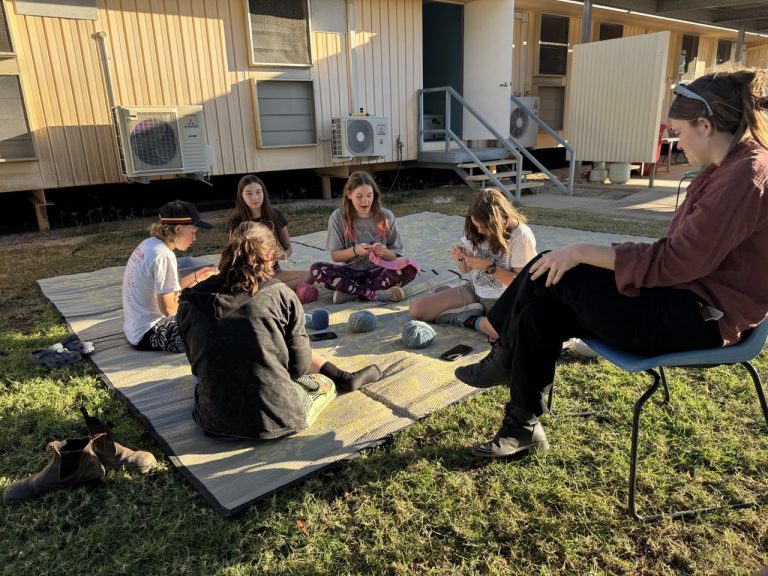
How many excursions, celebrations of learning, drama showcases, Lantern Parades, cooking classes, sustainability challenges, and musical performances have we embraced this term alone? Too many to count easily, but each one forms a brushstroke in the rich tapestry of holistic education we offer. These aren’t extras. They’re essentials. And we offer these experiences as a matter of service BECAUSE they are important – vital!!
Right now, I’m writing from a small country kitchen. Year 9 and 10 students are playing handball outside and chatting in their dorms, full of curiosity and contentment after a day delving into the prehistoric wonders of Winton. Today, they saw the only fossilised sauropod stomach contents ever discovered, up close. That’s not something you forget. We are exploring life that existed and flourished 95 million years ago!
We’re five days into a fourteen-day expedition – a rite of passage through central Queensland. We’re travelling through fossil beds and star fields, pioneer histories and modern realities. Our students are touching the cultural and ecological fabric of this nation. They are asking questions. They are seeing.
We’ve walked through pioneer villages, explored sheep stations, learnt about shearers like Jackie Howe (blade shearing 321 sheep in 7 hours and 40 minutes), discovered Banjo Paterson’s Waltzing Matilda and bush poetry; tasted – and smelled – the Artesian basin water; learnt about the indigenous massacres, explored the rural life of cinema (and watched the State of Origin as outsiders – as QLD saw off the Blues – on the big screen in Winton’s open air cinema). We have explored the stock-routes and the Hall of Fame, the birthplace of QANTAS – and the acronym Queensland and Northern Territory Air Services.
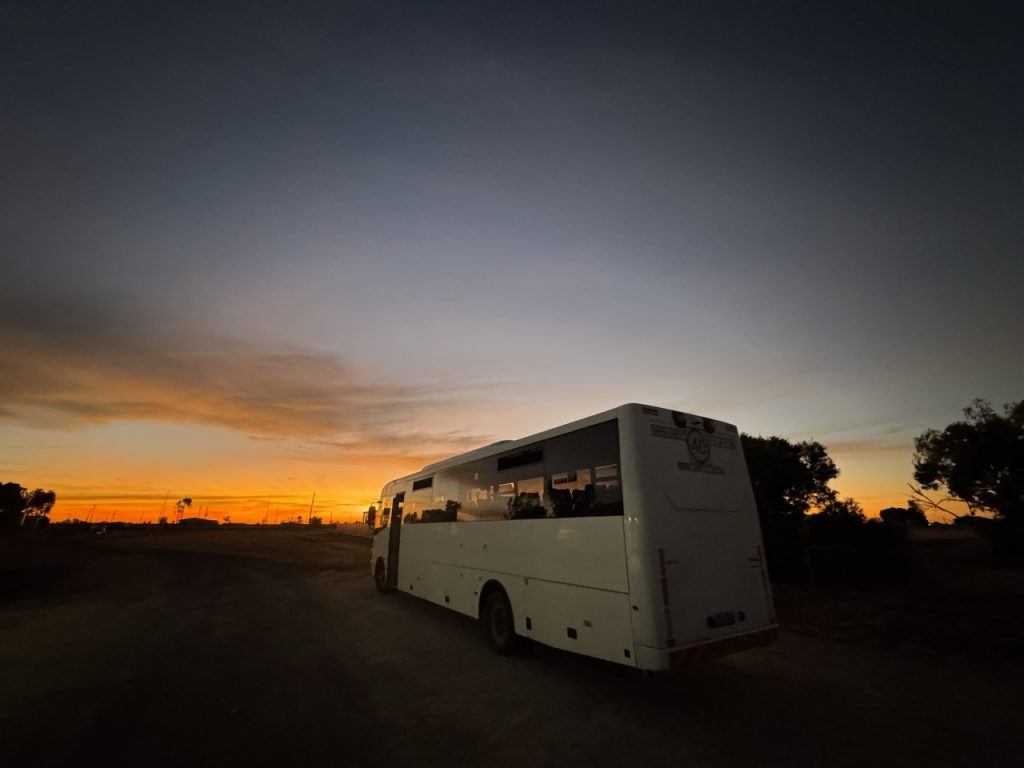
We take students outside the four walls of the classroom because life doesn’t happen within them. Hahn insisted that students needed real experiences in leadership, compassion, physical challenge, and social responsibility to prepare them for meaningful lives. Dewey told us that knowledge must be actively constructed, not passively received.
On expedition, students are required to give—to one another, to their teachers, to the world. They rise to the occasion. They learn to cook, clean, adapt, compromise, listen, and lead. They learn that character is not inherited—it’s built.
I have watched students grow in empathy, confidence, resilience, and grit. And I have watched staff give deeply of themselves to nurture this growth. It is not always easy – but it is always worth it.
As we traverse this vast inland, we are mostly joined on the roads by grey nomads. But rarely do we pass other school groups. That, to me, is a quiet tragedy. Why are more schools not doing this? Why are we not taking our children into their own country, into these histories and geographies?
At Living School, we believe this is vital. This is education for life. These trips are not distractions from the curriculum—they are the very heart of it. They are our curriculum made real.
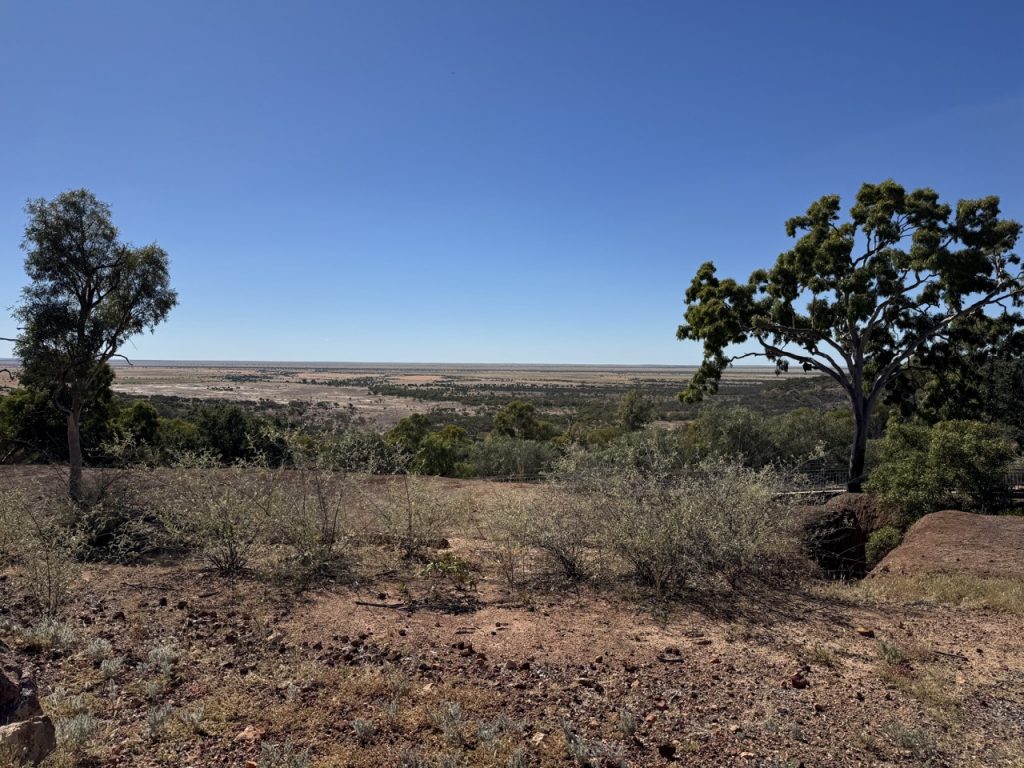
We garden the future through our service. We teach our children not just what to know—but how to live. This term has shown us, once again, that when we travel, when we go beyond the familiar, we grow.
We will return to campus soon with tired feet, full hearts, and stories to last a lifetime. And we will have done what Hahn and Dewey implored educators to do:
We will have taught through life, for life.