
Rewilding Education
Steering Toward a Nature-Rich Future
By John Stewart, Conductor of Living School
As we gather pace in 2025, it feels timely to pause, breathe in, and take stock of where we are steering this wondrous, living vessel of learning. This year, our compass points firmly to Organisation and Communication – but beneath that, pulsing through every moment, is something deeper: a rekindling of connection. A remembering. A rewilding.
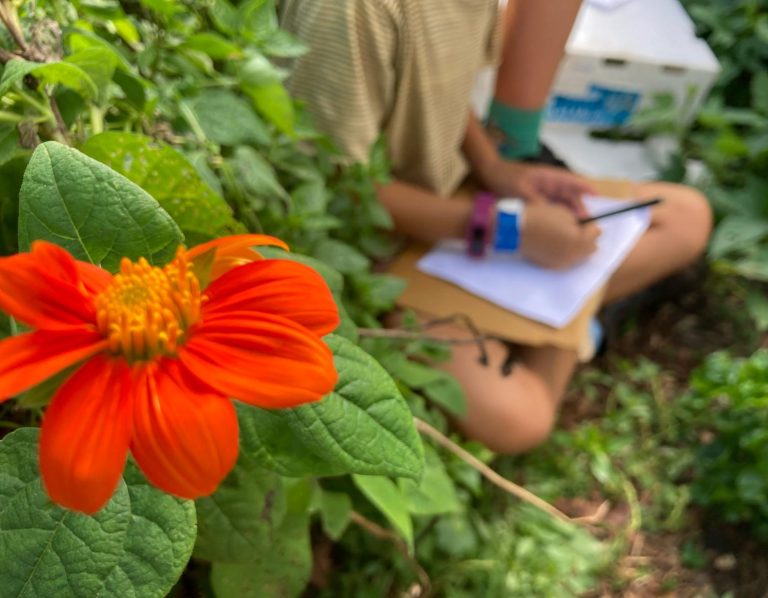
CONNECTING WITH NATURE
It’s no accident that the word Nature comes from the Latin nasci, meaning “to be born.” Nature is not simply a backdrop to learning: it is the very source of it.
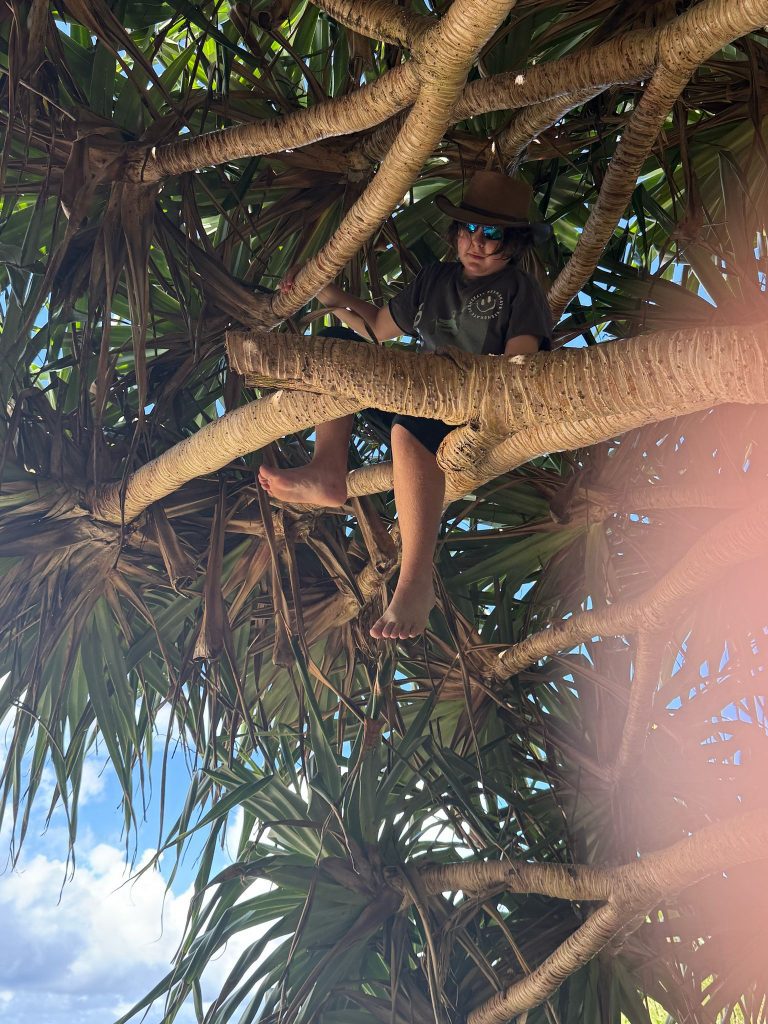
At Living School, we are committed to the principle of being in Nature, with Nature. We walk the riverbanks. We listen to birdsong. We plant, grow, cook, and forage. We learn the language of leaves. Because before we can protect something, we must first fall in love with it.
Biologist E.O. Wilson called this innate love of the natural world biophilia – a powerful counter to its shadow, ecophobia, the fear and detachment from nature that grows when children are told more about ecological collapse than wonder. At Living School, our antidote is awe. It is reverence. It is daily rituals that bind us to the land beneath our feet and the sky that stretches above.
“Humanity is part of nature, a species that evolved among other species. The more closely we identify ourselves with the rest of life, the more quickly we will be able to discover the sources of human sensibility and acquire the knowledge on which an enduring ethic, a sense of preferred direction, can be built.”
– E.O. Wilson
REAL LEARNING IS IN THE REAL WORLD
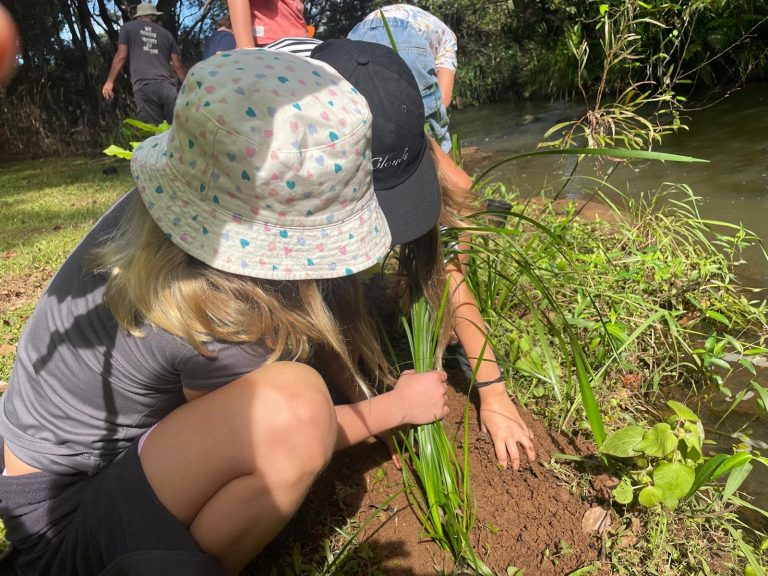
This vision is made tangible through the real-life learning experiences that enrich our days. Year 4 students are out each week, planting trees – restoring country, one sapling at a time. Others have been exploring the incredible work of the Byron Wildlife Hospital, learning firsthand about conservation and animal care. Hikes into the hinterland, Indonesian cultural exchanges, and our hands-deep kitchen garden project bring curriculum to life in powerful ways. Year 8 students are preparing for bike treks that will test resilience and teamwork; others prepare for visits to Victoria Park and Rocky Creek Dam sparking new questions and fresh insights on a very local level. From busy bee talks at school to trips to Myocum’s flourishing apiary, our students are immersed in learning that is memorable, relevant, and real. These aren’t just excursions – they are experiences that shape character and deepen understanding of the living world.
I recently had the privilege of speaking at the Action Wisdom Conference in Melbourne, sharing our vision of rewilding education. There, I spoke about the Analemma – those beautiful infinity loops the sun traces across the sky when photographed from the same spot at the same time each day. This solar dance is a metaphor for what we seek: to remain still enough, rooted enough, to witness the great cycles of life. The world moves, and so do we – but we must learn to listen, feel, and regret, to challenge, deliberate, and author, to connect, communicate, and exhibit our learning in ways that matter.
As with all ecosystems, change is a natural and necessary part of growth. This term we farewell three of our remarkable educators: Nigel, who has been the guiding our sport and outdoor education program, is taking time to pursue new passions and possibilities; Ahmed, who has energised our maths and science learning, is moving into his own business ventures; and Mark, a treasured educator who is settling into a well-earned retirement – a chapter that gifts him the agency to explore time and space on his own terms. We are deeply grateful for their contributions to Living School. While it’s never easy to see exceptional staff move on, we are heartened by the strength of our team and the incredible educators stepping up: Racquel Wilson will take on the mantle of mathematics, while Ash Whiterod brings her experience and energy to science and our drive to integrate more agriculture science and programs – and we are advertising near and far for our outdoor education coordinator and sports teacher (or teachers).
Our vision is held by many, and when that vision is shared, change becomes opportunity. We are blessed to have so many supporting our development. Rich Bolus has joined us, steering our journey to further organise and communicate all that we are doing – and preparing. The introduction of Classter is nearly ready – but we are still refining this school management system for parents so we are thoroughly prepared and ready. This platform will give parents a full organisation and communication connection. There are lots of opportunities under development – beyond this platform – which are exciting.
And speaking of opportunity: we are thrilled to announce that we have lodged registration for our new Distance Education pathway to start in 2026, called Horizon Learning, which will support our growing HSC offerings and offer another pathway. This model will embrace flexibility and agency, offering students a hybrid approach to learning. Students will be able to engage in subject-specific ‘learning clinics’, led by our passionate educators, as part of a program that reimagines the senior years with relevance and rigour. These clinics will be housed in our new Cara Polowytsch Library and Learning Centre, nestled at the front of our Brown and Jolly Middle School building, forming a vibrant nexus for deep thinking, collaboration, and personalised learning.
PROVIDING THE PROPER ENVIRONMENT
Meanwhile, just across the courtyard, exciting developments are underway. Our Brown and Jolly construction project has entered its next phase, with work commencing and the final council meetings scheduled for the end of this month. A massive thank you to Chris Brandon for his tireless coordination of the project alongside our visionary partners at Cave Urban. Together, they are bringing to life a building that is scheduled to open in 2026: a space that will be more than bricks and mortar. It will be a home for curiosity and creativity. With a repair cafe, agriculture centre and rainforest, design and make studios, and facilities for music, visual arts, drama and stage production, this will be a learning hub like no other. Under the guidance of our extraordinary pedagogue Emma Wilson, we are developing a truly progressive environment and program that supports the whole child, and every wild, wonderful idea they wish to bring to life.
This is the future of education – not one built solely on sustainability, but on regeneration. Not one boxed in by monocultures of thought, but enriched by the wild diversity of people, places, and paths. As Helena Norberg-Hodge reminds us, decentralisation and holistic knowledge are the way forward. True education is not mass-produced. It is crafted, cultivated, and courageous.
Let us not forget: the word school comes from the Greek scholē, meaning leisure in the pursuit of knowledge. What would it mean to return to that? To create time and space for children to think, to wonder, to wrestle with big questions, not just rehearse answers? How many of us were truly taught to think, to be curious, to question the world, and our place in it?
Too often we fall into the trap of fear: fear of failure, fear of risk, fear of doing things differently. But fear is the great inhibitor. And our children are sacred not because they are fragile, but because they are powerful. So we must give them agency. We must design rites of passage, real challenges, and real-world work that affirms their growing independence.
“Economic localisation is the key to sustaining biological and cultural diversity - to sustaining life itself. The sooner we shift towards the local, the sooner we will begin healing our planet, our communities and ourselves.”
- Ancient Futures, Helena Norberg-Hodge